
MIIT Rolls Out Its Top-Level 6G Policy, Driving New Integrated Fiber Optic Sensing Solutions
- 1. MIIT's core policy direction: 6G extends beyond wireless communications, with fiber serving as the backbone for ubiquitous integrated communication and sensing.
- 2. Four standardized fiber optic sensing applications under the integrated 6G communication and sensing architecture.
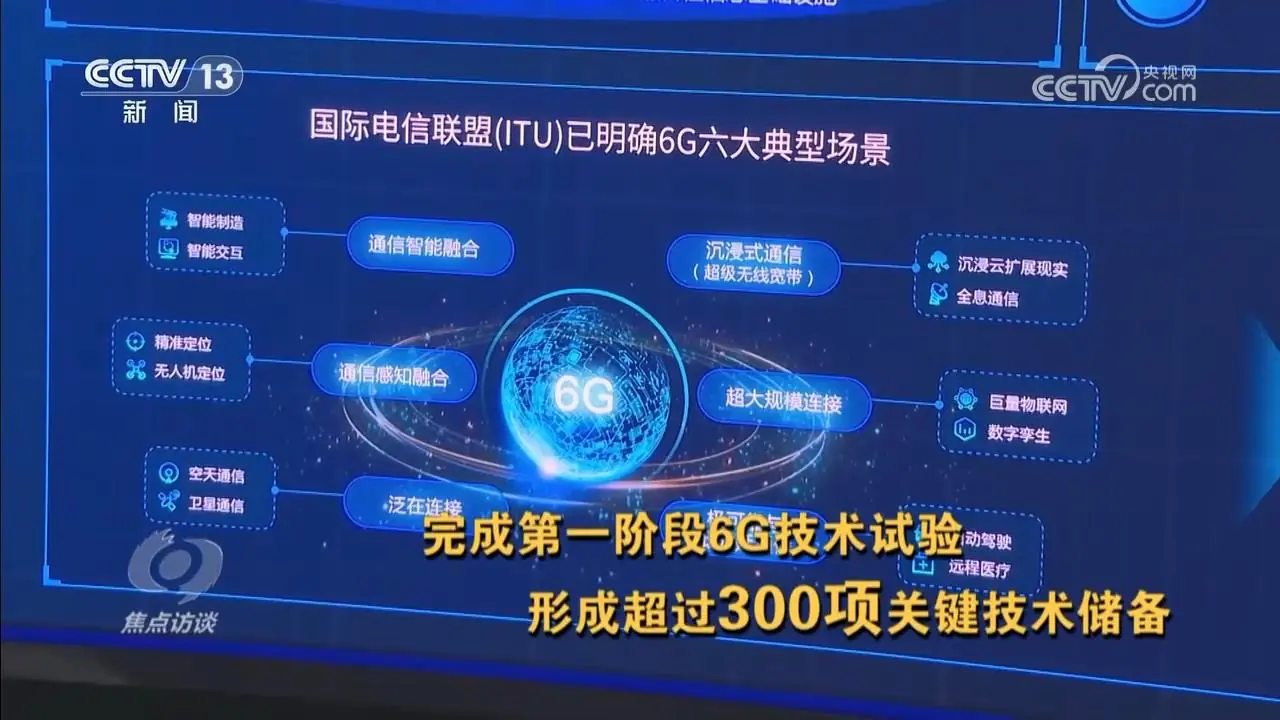
The Ministry of Industry and Information Technology recently issued two major industry policy documents while advancing nationwide ministry-province collaborative 6G pilot programs. The policies identify integrated communication, sensing, computing, and intelligence as a core research direction for sixth-generation mobile communications. They call for 10-gigabit fiber networks and hybrid optoelectronic networking to connect wireless 6G base stations with wired distributed fiber optic sensing systems, creating coordinated monitoring links for integrated safety sensing in energy, rail transit, urban lifelines, and smart maritime applications. These initiatives are opening a new policy-driven growth cycle for the fiber optic sensing industry.
1. MIIT's Core Policy Direction: 6G Extends Beyond Wireless, with Fiber as the Backbone for Ubiquitous Communication and Sensing
According to MIIT's June 2026 notice on the special ministry-province collaborative 6G pilot initiative, China's national vision for 6G has expanded from high-speed wireless transmission alone to an integrated communication and sensing network spanning space, air, land, and sea. The document sets out two key implementation requirements:
Bridge wireless sensing and wired fiber optic sensing: 6G wireless base stations perform wide-area spatial scanning and moving-target monitoring, while distributed fiber optic sensing reuses existing communications fiber to provide continuous, passive, explosion-proof, and electromagnetically immune monitoring of long linear infrastructure such as pipelines, tunnels, cables, and bridges. Both data streams converge at 6G edge computing nodes, forming a two-layer architecture that combines wide-area wireless coverage with precise linear fiber sensing;
Accelerate engineering trials for hybrid optoelectronic networks: next-generation optical networks should support DAS, DTS, and BOTDR distributed fiber optic sensing interrogators and reuse existing communications fiber so that a single cable can carry both 6G backhaul traffic and multiparameter temperature, vibration, and strain sensing. This approach significantly reduces duplicate cabling costs and is a key domestic integrated solution encouraged by MIIT. The accompanying "Implementation Guidelines for the Innovative Development of AI + Information and Communications (2026-2028)" set further three-year targets: deploy more than 30 benchmark integrated communication and sensing scenarios by 2028, use fiber-edge computing for real-time local AI analysis of sensing data, achieve sub-millisecond warning responses, and provide at least 75% coverage within metropolitan one-millisecond computing latency zones. These goals provide computing and network policy support for the intelligent upgrade of fiber optic sensing. A white paper from the IMT-2030 (6G) Promotion Group adds that conventional 5G provides communications only, while 6G incorporates sensing natively. Wireless sensing, however, has limited range, is susceptible to electromagnetic interference, and cannot be deployed underground or underwater. Distributed fiber optic sensing complements these limitations, making their integration the viable technical path for full-scenario digital twins and ubiquitous infrastructure health monitoring.
2. Four Standardized Fiber Optic Sensing Applications Under the Integrated 6G Architecture (Priority Directions for MIIT Pilots)
Based on MIIT's list of pilot scenarios and published results from 6G technical trials, the integration of fiber optic sensing with 6G networks has produced four mature deployment solutions that are now the primary focus of engineering validation:
Integrated 6G fiber communication and sensing for utility tunnels: existing 6G transport fiber in a utility tunnel is reused as sensing fiber and paired with a proprietary integrated interrogator to collect cable temperature, pipeline vibration, and soil strain data simultaneously. The sensing data is transmitted over fiber to the AI computing unit at a 6G edge base station, which automatically identifies risks such as third-party excavation, cable overheating, and pipeline leaks, enabling intelligent unmanned tunnel operations and maintenance.
Wireless-fiber collaborative monitoring for rail transit tunnels: 6G terahertz base stations wirelessly scan train movements and trackside intrusions, while fiber optic sensing systems along the tunnel continuously monitor structural deformation, fire temperatures, and track-bed vibration. The two sensing data streams are modeled together in the 6G core network to create a digital-twin safety platform for the tunnel.
Ubiquitous communication, sensing, and warning for long-distance oil and gas pipelines: ground-based 6G low-altitude base stations inspect the surface environment along pipelines, while underground distributed fiber optic sensing monitors pipeline leaks and illegal excavation vibrations around the clock. Passive fiber equipment complies with explosion-protection requirements at oil and gas facilities, addressing the difficulty of deploying wireless equipment at scale in high-risk chemical areas.
6G and multiparameter fiber monitoring for power corridors: fiber installed in ultra-high-voltage cable trenches measures temperature and vibration simultaneously, while 6G base stations identify people and machinery entering the surrounding corridor. Integrated AI algorithms distinguish traffic and animals from excavation activity, reducing false alarms in power operations and maintenance.
3. NVS: Proprietary Full-Stack Fiber Optic Sensing Hardware and Software for the Integrated 6G Industry
NVS is a Shenzhen-based high-tech company specializing in the development and mass production of integrated fiber optic sensing hardware and software. Its product portfolio closely aligns with MIIT's policy direction and technical roadmap for integrated 6G communication and sensing. The company's proprietary DAS/DTS multiparameter integrated interrogators can be deployed on the same network as 6G transport equipment and reuse existing communications fiber for sensing, eliminating the need for dedicated fiber and meeting policy requirements for resource reuse, lower costs, and greater efficiency. The equipment supports edge preprocessing on the fiber side and connects directly to 6G edge computing nodes for local denoising and feature extraction. NVS provides complete customized solutions spanning proprietary interrogation hardware, edge acquisition terminals, and integrated communication and sensing monitoring platforms. These solutions support private on-premises deployment and remote operations through the 6G cloud, backed by comprehensive technical and production capabilities.
4. Industry Outlook
Under MIIT's roadmap, 2026-2027 is the critical period for the second phase of 6G technical trials, during which integrated communication and sensing pilot projects will be deployed across multiple regions. Large-scale technical solutions are expected to be finalized by 2029, followed by the gradual commercialization of 6G around 2030. Over the next three years, telecommunications operators, infrastructure contractors, and energy companies will undertake large-scale upgrades integrating 6G optical networks with fiber optic sensing. Domestic fiber optic sensing suppliers with full-stack capabilities in proprietary hardware, algorithm development, and system integration will hold a key competitive advantage.
NVS will continue to follow MIIT's 6G industry policy roadmap, advancing next-generation multiparameter interrogation equipment and integrated sensing algorithms for communication and sensing architectures. The company will remain focused on localized, ubiquitous safety monitoring and help China's next-generation information infrastructure achieve independently controlled integration of communications, sensing, and intelligence.
Authoritative Policy Sources
- "Notice on Organizing the Special Ministry-Province Collaborative Pilot Initiative for 6G Innovation and Development," issued by the General Office of the Ministry of Industry and Information Technology on June 4, 2026; published by China News Service and the People's Daily app.
- "Implementation Guidelines for the Innovative Development of AI + Information and Communications (2026-2028)" (MIIT Communications [2026] No. 121), issued by MIIT on June 3, 2026; official channels include the MIIT website, Guangming Online, and CLS.
- "6G Overall Vision and Potential Key Technologies White Paper" by the IMT-2030 (6G) Promotion Group, prepared under MIIT guidance. Its central argument is that 6G will establish native capabilities in both communications and ubiquitous sensing. As the transport backbone of 6G, optical fiber will combine with distributed fiber optic sensing to form a coordinated wired-wireless communication and sensing system capable of centimeter-level, high-precision monitoring across all environments.